

Introduction
The rapid evolution of robotics has transformed how humans interact with machines, and one of the most striking examples of this progress is the Chinese robot dog. Designed to replicate the movement, balance, and adaptability of real animals, robot dogs represent a powerful combination of artificial intelligence, mechanical engineering, and real-time data processing.
At Galgotias University, the display of a Chinese robot dog became more than a demonstration—it turned into a learning experience that bridged theory with real-world innovation. Students, faculty members, and technology enthusiasts witnessed how advanced robotics is no longer confined to laboratories but is actively shaping the future of automation, surveillance, education, and intelligent systems.
This article explores the technology behind robot dogs, their significance in modern robotics, and the academic value of showcasing such innovations within a university environment.
Understanding Robot Dog Technology
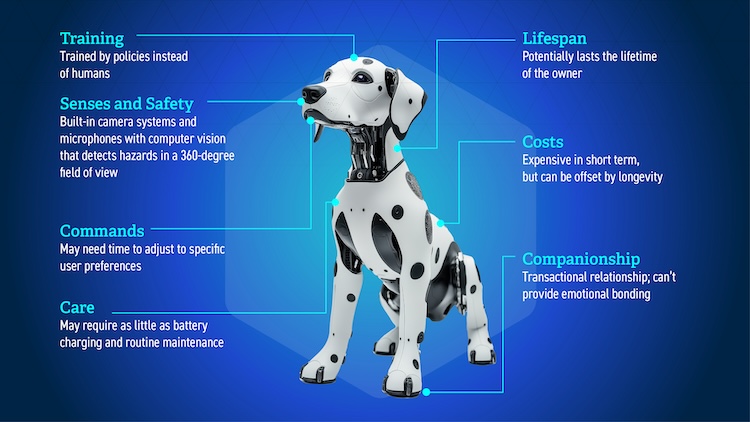
Robot dogs are quadruped robots engineered to move with stability and agility similar to animals. Unlike wheeled robots, they can walk, run, climb stairs, and adapt to uneven terrain. Chinese robotics companies have played a leading role in refining this technology, integrating advanced algorithms and compact hardware to improve performance and reliability.
Key Characteristics of Robot Dogs
Robot dogs are designed to function autonomously or under human control. Their structure includes jointed legs, motors, sensors, and onboard processors that allow real-time decision-making. These machines can operate indoors and outdoors, making them suitable for multiple industries.
- Adaptive quadruped movement for uneven surfaces
- AI-driven navigation and obstacle avoidance
- Real-time data collection through smart sensors
- Remote control and autonomous operation modes
- Modular design for research and industrial use
Robot dogs combine AI, mechanical engineering, and sensor technology to achieve animal-like movement, enabling advanced applications in education, research, and industry.
Chinese Innovation in Robot Dogs
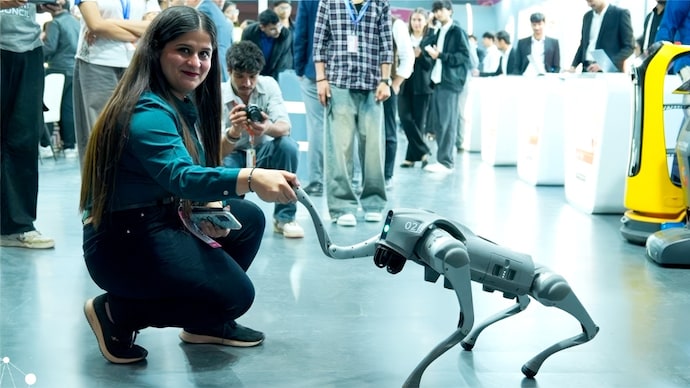
China has emerged as a global leader in robotics research and manufacturing. The development of robot dogs reflects the country’s focus on intelligent automation, precision engineering, and scalable technology. Chinese robot dogs are recognized for their balance, durability, and cost-effective design, making them accessible to academic institutions.
Engineering Excellence
Chinese robot dogs integrate lightweight materials with powerful actuators. Their control systems are trained using machine learning models that allow the robot to adjust posture, speed, and movement patterns dynamically. This engineering approach results in smoother motion and higher energy efficiency.
Software and Intelligence
The intelligence behind a robot dog lies in its software architecture. Motion planning algorithms, vision processing, and sensor fusion work together to create a responsive machine. These systems allow robot dogs to map environments, recognize obstacles, and execute complex tasks with precision.
Demonstration at Galgotias University

The robot dog demonstration at Galgotias University served as a practical example of how advanced robotics can be integrated into academic learning. Students from engineering, computer science, and artificial intelligence disciplines observed the robot dog in action, gaining insights into real-time robotics systems.
Educational Impact
The presence of a robot dog on campus encouraged interdisciplinary learning. Mechanical engineering students focused on movement mechanics, computer science students analyzed algorithms, and AI researchers explored autonomous decision-making.
Research Opportunities
Such demonstrations open doors to hands-on research. Universities can test control algorithms, improve sensor accuracy, and experiment with human-robot interaction in controlled environments.
The robot dog demonstration at Galgotias University connected classroom theory with real-world robotics, inspiring students to explore AI-driven automation systems.
Technical Components of the Robot Dog

Understanding the robot dog requires breaking down its core components. Each part plays a crucial role in ensuring smooth operation and intelligent behavior.
Hardware Architecture
The physical structure of a robot dog is designed to mimic animal anatomy. Jointed legs provide flexibility, while internal motors generate precise movement. The body houses processors, batteries, and communication modules.
Sensor Systems
Robot dogs rely on multiple sensors to perceive their environment. These include cameras for vision, inertial sensors for balance, and distance sensors for obstacle detection.
Table 1: Core Components of a Chinese Robot Dog
| Component | Function | Importance |
|---|---|---|
| Actuators | Control leg movement | Enables walking and running |
| AI Processor | Decision-making and control | Core intelligence unit |
| Cameras | Visual perception | Object and obstacle detection |
| Sensors | Balance and navigation | Stability and adaptability |
| Battery System | Power supply | Determines operating time |
Applications of Robot Dog Technology
Robot dogs are not limited to demonstrations or research. Their applications span multiple industries, showcasing their versatility.
Academic and Research Use
Universities use robot dogs for teaching robotics, AI programming, and control systems. They serve as test platforms for experimental algorithms and simulations.
Industrial and Commercial Use
Robot dogs can be deployed for inspection tasks in factories, power plants, and construction sites. Their ability to navigate complex environments makes them ideal for monitoring operations.
Safety and Surveillance
With cameras and sensors, robot dogs can assist in surveillance and security operations, reducing risks to human personnel.
Robot dog technology extends beyond education into industry, surveillance, and research, proving its value as a flexible and intelligent robotic platform.
Role of Universities in Robotics Advancement
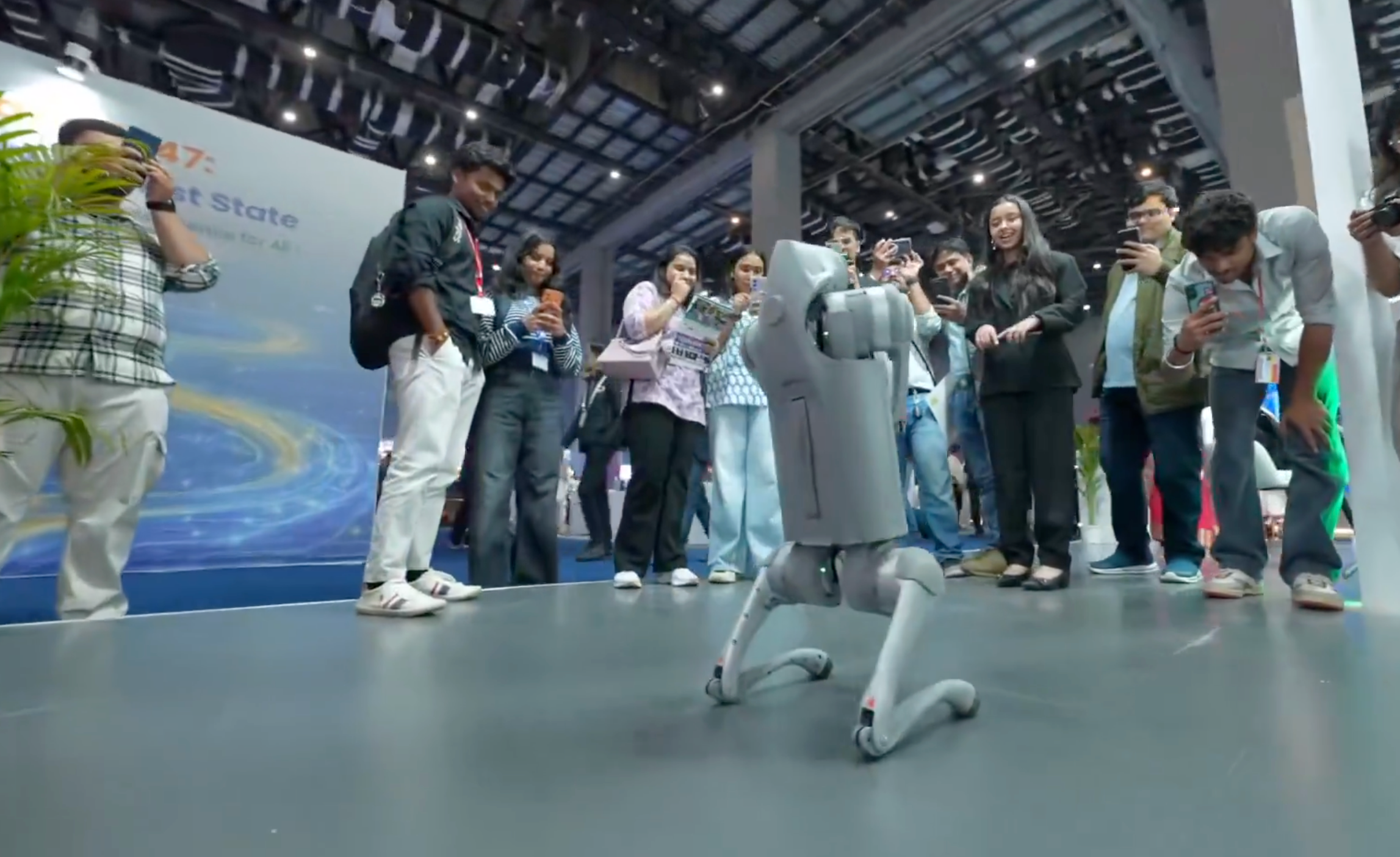
Universities play a critical role in shaping the future of robotics. By hosting advanced robotic systems, institutions provide students with exposure to real-world technologies.
Skill Development
Hands-on interaction with robot dogs helps students develop practical skills in programming, system integration, and troubleshooting.
Innovation Culture
Such demonstrations foster curiosity and innovation. Students are encouraged to think creatively and explore how robotics can solve real-world problems.
Ethical and Social Considerations
As robotics becomes more integrated into society, ethical considerations must be addressed. Robot dogs raise questions about data privacy, job displacement, and responsible use.
Responsible Development
Academic institutions emphasize ethical guidelines to ensure technology is used for beneficial purposes.
Human-Robot Interaction
Understanding how humans perceive and interact with robotic systems is crucial. Universities provide a safe environment to study these interactions.
Future Scope of Robot Dogs in India
The demonstration of a Chinese robot dog highlights the growing interest in advanced robotics within India’s education sector. As technology becomes more accessible, robot dogs may become standard tools in engineering education.
Integration with Curriculum
Future curricula may include specialized courses focused on quadruped robotics and autonomous systems.
Research Collaboration
Universities can collaborate with industry partners to develop localized applications and improve robotic solutions tailored to regional needs.
Table 2: Educational Benefits of Robot Dogs in Universities
| Area | Benefit | Outcome |
|---|---|---|
| Robotics Education | Hands-on learning | Improved technical skills |
| AI Research | Real-world testing | Better algorithms |
| Student Engagement | Interactive demonstrations | Higher interest in STEM |
| Innovation | Experimental projects | New research ideas |
| Industry Readiness | Practical exposure | Career preparedness |
Conclusion
The display of a Chinese robot dog at Galgotias University reflects the growing convergence of education and advanced technology. Robot dogs symbolize the future of intelligent machines—adaptable, autonomous, and capable of transforming how humans work and learn.
By bringing such innovations into academic spaces, universities empower students to move beyond textbooks and engage directly with cutting-edge systems. As robotics continues to evolve, robot dogs will remain an important milestone in the journey toward smarter, more responsive machines that shape tomorrow’s world.
Read More:- Simple Cybersecurity Tips to Prevent Online Threats